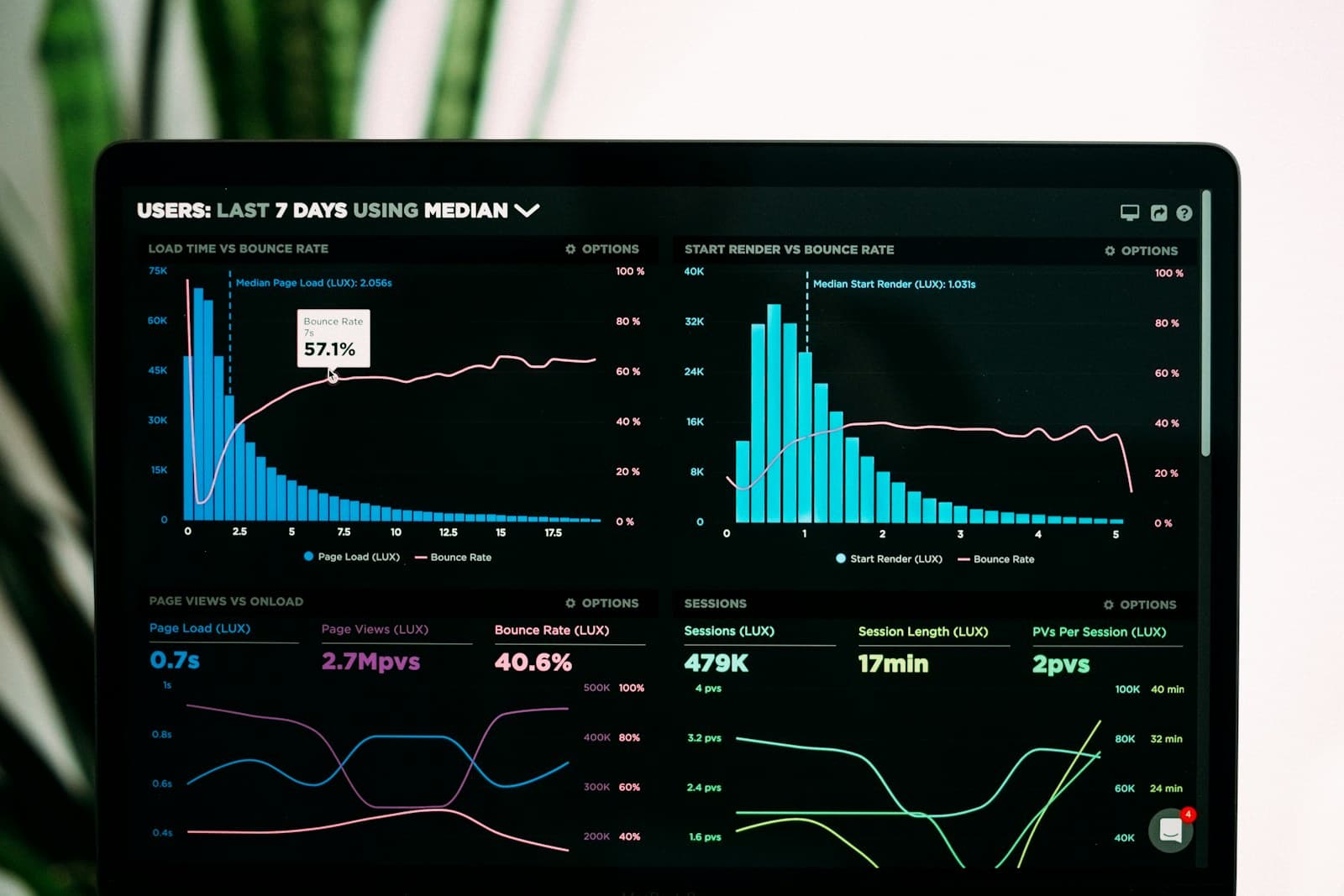
Which financial KPI signals should scaling CEOs prioritize in 2026 to stay ahead of risk instead of reacting to past performance? How can the right financial KPI framework help leaders diagnose structural issues before growth amplifies them? Why does tracking forward-looking financial KPI metrics matter more than relying on traditional profit and loss statements?
This blog breaks down why scaling CEOs must move beyond historical reporting and focus on forward-looking financial KPI metrics that provide real clarity and control. Rather than relying solely on profit, revenue, or bank balances, the article explains how KPIs like gross margin, CAC, payback period, and operating cash flow reveal early warning signs and guide smarter decisions. Each financial KPI is positioned as a diagnostic tool—one that helps leaders understand whether their business model can truly support growth.
Looking ahead to 2026, the post outlines how a disciplined financial KPI strategy separates sustainable scaling from chaotic expansion. By tracking efficiency, cash velocity, recurring revenue, forecast accuracy, and capital burn, CEOs gain context instead of noise. The result is confident hiring, intentional spending, predictable growth, and calmer leadership. Ultimately, the article shows how mastering the right financial KPI metrics turns data into direction—and scaling into freedom rather than stress.
Most CEOs say they’re data-driven. But when you look at their numbers, they show a profit and loss statement. That’s not being data-driven, that’s being data-adjacent.
Growing companies don’t fail because they didn’t have enough data. They fail because they relied on historical data, numbers that tell you what already happened, not what’s coming next.
When you’re looking at historical reports during scaling, they can mislead you. They hide early warning signs, mask operational drift, and keep you reactive instead of proactive. That’s why CEOs who rely only on profits, losses, and bank balances operate one step behind.
Scaling requires forward-looking, context-rich key performance indicators (KPI). The kind that helps you diagnose problems early, see around corners, and allocate resources with intention. These KPIs aren’t just academic; they’re also directional. They replace guessing with guidance.
And that’s where business development and finance get the chance to intersect. Because you can’t just grow a company on instinct alone. You need a pulse on the metrics that actually drive expansion and signals that show when to scale, when to slow down, and when to fix something before it breaks.
The bottom line is you don’t need more data; you need better context. And this is where most CEOs shift from “hoping they’re right” to finally seeing what’s real. Clarity changes decisions while also changing confidence.
KPI #1: Gross Margin
Gross Margins are the backbone of economics. It’s the answer to a simple question that most CEOs ask themselves:
“How much do we keep after delivering what we sell?”
If your gross margin isn’t strong, scaling will only enhance the weakness. More customers won’t save you; they’ll just sink you. If it’s low, don’t scale yet. Fix your pricing or delivery first.
A strong gross margin shows:
- That your pricing aligns with value
- That your delivery model is efficient
- That your labor and cost of goods sold (COGS) are controlled
- That your offer has room to grow
A weak gross margin shows:
- Underpricing
- Over-delivery
- Operational inefficiencies
- A confused offer structure
In 2026, benchmarks are making a huge shift. Labor is more expensive. And AI tools have lowered some operational costs. COGS in many service industries are dropping.
This means margins should be improving, not shrinking.
A business ready to scale has a financial KPI pattern and a gross margin that stays stable or rises even as volume increases.
If your margin slips every time demand rises, the issue isn’t growth; it’s a structural problem.
A margin that collapses under pressure is a signal that your delivery and offer structure can’t support scale yet. This is why margins become one of your earliest and clearest diagnostic tools.
I’ve seen businesses double revenue and lose profit because their margin couldn’t carry the weight. They weren’t broken; they just didn’t have a margin built for volume. That’s the power of knowing your numbers early on.
KPI #2: General & Administrative Costs (G&A)
General & Administrative costs are like a huge junk drawer of business spending because everything just ends up in there. Tools, admin salaries, software, subscriptions, office costs, and all the “we might need this later” purchases.
During growth, G&A tends to creep, not dramatically but quietly. The danger is that G&A often grows faster than revenue. And when that happens, it doesn’t matter how much revenue increases; the profit still disappears.
A scaling CEO must be able to distinguish investment from unnecessary expenses.
Investment examples look something like this:
- A system that reduces human hours
- A tool that can improve delivery speeds
- A hire that enables revenue growth
- Training that improves productivity
Examples of bloat look like:
- Tools that no one bothers to use
- Admin work that never gets automated
- Roles created without KPIs
- “Nice to have” subscriptions that don’t solve anything
Your financial KPI for G&A is the ratio of G&A spend ÷ Revenue.
If this ratio rises steadily, you’re not growing.
In 2026, efficient companies will win. Not the biggest teams or the flashiest brands.
In the end, most CEOs realize that most of their G&A spend isn’t useless; it’s just unmeasured and unplanned. When you don’t have KPIs, it means no accountability. Once you develop them, decisions become sharper, and spending becomes intentional rather than emotional.
KPI #3: Customer Acquisition Cost (CAC)
Customer Acquisition Cost is simple—how much does it cost to acquire a new customer?
But in 2026, CAC will become more complicated than ever.
Privacy changes have reshaped tracking. Paid traffic is more expensive. AI targeting is powerful, but only if your data is clean. If you return in under six months, pursue growth. If it takes 9+ months, fix your offer or your sales process first.
Your CAC becomes a financial KPI that reveals far more than your marketing efficiency.
It shows:
- Clear positioning
- Resonating offers
- Your sales process is aligned
- Pricing supports acquisition costs
CAC is a story, and every story has a cause.
More importantly, CAC tells you whether your messaging is aligned with your market.
When CAC spikes suddenly, the issue is rarely found in ads; the issue is clarity. A confused buyer will always cost you more.
KPI #4: CAC Payback Period
This is one of the most misunderstood KPIs, and it just so happens to be one of the most important.
The CAC payback period answers “How long until the money spent to acquire a customer returns?”
A short payback period accelerates growth, but an extended one slows everything down.
A general rule of thumb:
- Under 3 months = exceptional
- 3–6 months = green light
- 6–9 months = fix before scaling
- Over 9 months = an immediate fix
Payback time can determine:
- Cash flow
- Hiring ability
- Marketing
- Expansions rate
- Funding
With tighter capital and more competitive markets, payback is a financial KPI that will separate companies that scale sustainably from those that burn out. Your growth velocity depends on how fast cash returns.
Think of payback like a fuel gauge. If it takes too long to refill the tank, you won’t make it far, even if the engine is strong. CEOs who scale recklessly often ignore this KPI until the runway is gone.
KPI #5: Sales & Marketing Efficiency
This KPI shows how effectively every sale or marketing dollar generates revenue.
It’s not enough to wonder if a campaign is actually working. You have to ask how fast you receive payment.
Slow ROI often signals issues like:
- Misaligned messaging
- Weak offer structure
- Wrong audience
- Poor sales handoff
AI-enabled forecasting will play a major role in tracking this financial KPI, giving CEOs clearer attribution, better predictions, and cleaner decision-making.
But the fundamentals will remain the same if your sales and marketing engine is slow; scaling will make it slower.
The best CEOs don’t wait for a quarterly report to see whether things worked. They build weekly KPI rhythms that flag issues early. A simple trend line can save hundreds of thousands of dollars.
KPI #6: Operating Cash Flow
Cash flow will always tell you in real time if your business is healthy or not.
Revenue can be noisy, and profits can sometimes be misleading. But cash flow is always consistent in honesty.
A strong cash flow means:
- Customers pay on time
- Delivery is efficient
- Expenses are controlled
- Leadership has flexibility
A weak cash flow means:
- Slow collections
- Over-hiring
- Delivery gaps
- Issues with pricing
When CEOs scale their companies, cash flow becomes an essential financial KPI.
After all, it’s poor cash flow that kills businesses, not growth.
Cash flow is also the first indicator of owner behavior. When cash flow tightens, founders either react in a disciplined or emotional way. One creates momentum. And the other creates a mess. Knowing this KPI helps keep decisions grounded instead of fear-driven.
KPI #7: ARR or MRR (Recurring Revenue Metrics)
Recurring revenue is the backbone of valuation, predictability, and operational calm.
Recurring models, whether they’re subscription-based, retainer, or hybrid, reveal stability better than all other financial KPIs.
A scaling CEO should track:
- Annual Recurring Revenue (ARR) / Monthly Recurring Revenue (MRR)
- Net Revenue Retention
- Expansion Revenue
- Contraction trends
Buyer behavior will continue to shift in 2026. Customers desire flexibility, transparency, and value. This means retention metrics are more important than top-line revenue.
When you examine the numbers, you will see that expansion revenue tells a story, and recurring revenue health predicts the future.
Most CEOs underestimate the impact until they see the math. Losing 10% per month means rebuilding your entire business every 10 months. KPIs illuminate the truth before it becomes pain.
KPI #8: Lifetime Value (LTV)
Lifetime value indicates the total profit a customer generates throughout their relationship with your company.
Signs of a strong LTV include:
- High retention
- Strong offer value
- Healthy pricing
- Loyal customers
Signs of a weak LTV look like:
- Delivery issues
- Weak onboarding
- Pricing misalignment
But the key is that LTV only matters when compared to CAC.
Your LTV to CAC ratio is the strategic financial KPI that helps you decide how aggressively to scale.
When LTV rises, everything gets easier—hiring, forecasting, pricing confidence, and cash planning. When LTV falls, it’s a sign your product doesn’t match your market as well as it once did. This is why trends matter more than snapshots.
KPI #9: Burn Rate & Runway (For Funding-Dependent Models)
If your business relies on outside capital, your burn rate and runway determine survival.
Burn rate shows just how fast your company is spending money, while runway reveals when you’ll run out at your current pace.
However, not all burn is bad.
Strategic burn looks like:
- Funded product development
- Market expansion
- Team building before scale
Inefficient burn looks like:
- Over-hiring
- Undefined roles
- Low Return on Investment (ROI) projects
- Reactionary spending
In the new year, a tighter financing environment and burn rates are becoming a critical financial KPI for leadership teams. Misreading it creates panic, while managing it well creates opportunity.
Here’s the mistake many founders often make: they treat burn as a moral issue, not a strategic one. Burn isn’t good or bad; it’s only good or bad relative to your plan and payback timeline. A KPI brings logic to what otherwise feels like pressure.
KPI #10: Forecast Accuracy
An accurate forecast distinguishes between accidental growth and intentional growth.
A forecast isn’t a guess; it’s a disciplined prediction built from real operational data.
When forecasts are inaccurate, a CEO might:
- Over-hire
- Under-invest
- Overspend
- Miss opportunities
- Lose momentum
When forecasts are accurate, CEOs will:
- Allocate with clarity
- Hire with confidence
- Invest with timing
- Predict runway
- Build sustainably
Machine learning tools will improve visibility, but the responsibility stays the same: a CEO must lead through the numbers, not just react to them. Forecast accuracy is the ultimate financial KPI because it reflects every other metric you track.
A forecast is not a prediction. It’s a commitment. A signal that every department is aligned. When forecasting becomes part of your culture, execution gets tighter, teams get sharper, and decision-making becomes calm instead of chaotic.
Conclusion: Turning Metrics into Context
There’s a huge difference between collecting data and then interpreting it.
Most CEOs exist in dashboards, and few know what numbers truly mean.
KPIs shouldn’t be overwhelming; they should serve as a guide. They should answer questions, not create more.
When you shift from reactive reporting to proactive, KPI-driven leadership, everything changes:
- Intentional growth
- Cash flow is predictable
- Hiring becomes strategic
- Pricing becomes confident
- Decision-making becomes simple
Because scaling isn’t about doing more, it’s about seeing more. The right KPIs give you the clarity to build the company you actually want, not the one you’re reacting to.
The right KPIs permit you to lead from clarity instead of a place of stress. Clarity compounds in decisions, in confidence, and in outcomes. When your numbers tell a story that you actually understand, you can stop running the business out of fear and start running it with more focus. That’s the shift that creates sustainable scaling, not chaos disguised as growth.
Designed growth is freedom.
